
RevoFi for Connected & Autonomous Vehicles
Distributed Edge Infrastructure for the V2X Ecosystem
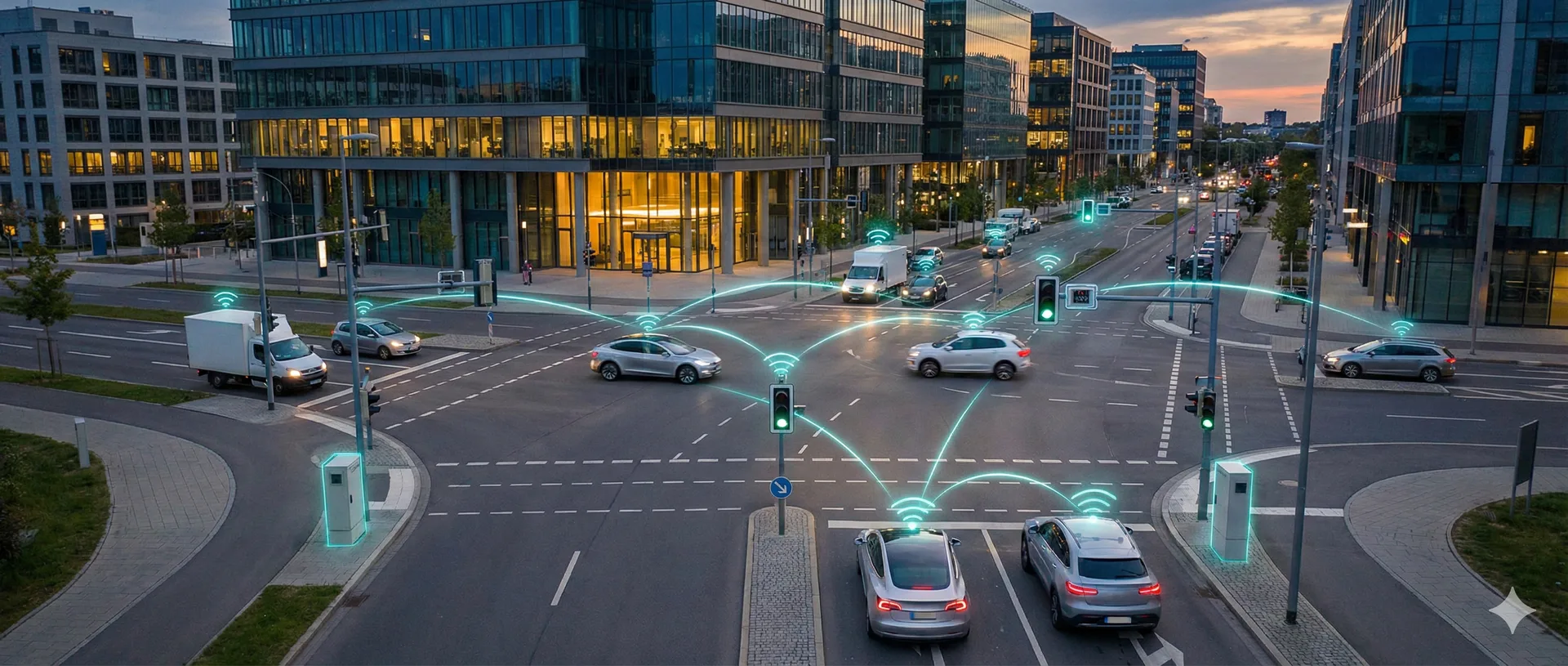
The Barrier Isn't the Car—It's the Road
The automotive V2X market is projected to grow from $2.87 billion in 2025 to $18.67 billion by 2030. But vehicles need infrastructure to enable cooperative driving—and that infrastructure faces fundamental challenges that vehicles alone cannot solve.
V2X Infrastructure Costs Are Prohibitive
Roadside Units cost $15,000-$30,000 per intersection plus $2,000-$3,000/year in maintenance. A metro area with 1,700 intersections requires $40M+ just for initial deployment. Most municipalities cannot fund this at scale.
5G Doesn't Deliver Promised Latency
While 5G promises sub-millisecond latency, real-world deployments consistently deliver 10-50ms delays. Multi-hop routing and handover delays make 5G unsuitable for safety-critical URLLC applications.
Coverage Gaps Persist Everywhere
5G availability remains spotty in rural areas, along highways, and in suburbs. Tunnels, parking structures, and urban canyons create dead zones precisely where V2X communication matters most.
Onboard Compute Has Limits
Connected vehicles generate up to 4TB of data per day. Processing this requires substantial compute, but vehicles face weight, power, and thermal constraints. Cloud processing introduces unacceptable latency.
Standards Fragmentation
The industry remains split between DSRC and C-V2X. The FCC narrowed DSRC spectrum while freeing bandwidth for C-V2X, stranding early deployments in upgrade limbo and slowing adoption.
Cloud Processing Fails Safety Apps
Cooperative perception and collision avoidance require decisions in milliseconds. By the time data travels to the cloud and returns, the situation has changed. Safety-critical apps need local edge processing.
How RevoFi Enables V2X at Scale
RevoFi delivers distributed edge infrastructure that provides the connectivity, compute, and communication capabilities V2X ecosystems require—at a fraction of traditional RSU deployment costs. Instead of waiting for municipalities to fund billions in infrastructure, RevoFi enables rapid deployment through decentralized networks.
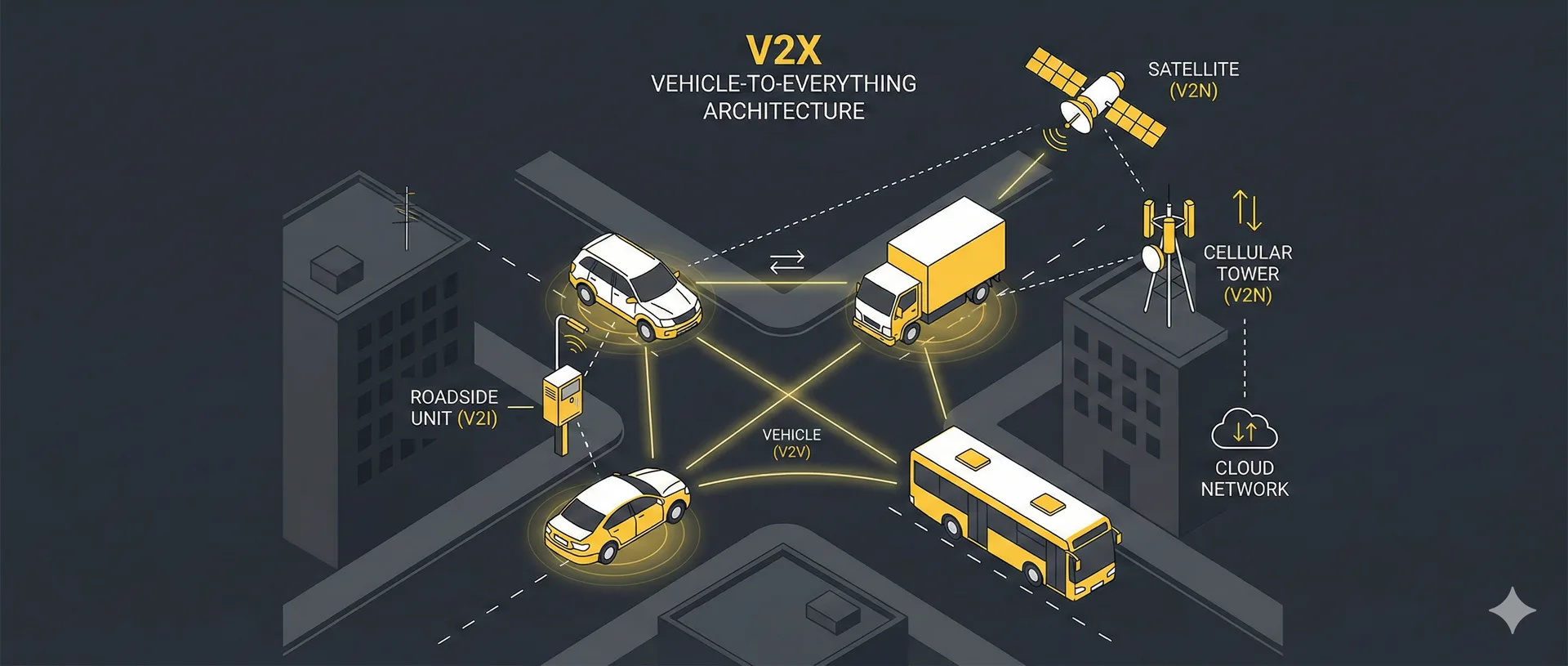
Cost-Effective V2I Infrastructure
RevoFi Link Pro devices cost significantly less than traditional RSUs while providing equivalent V2X functionality. Deployed at retail locations, gas stations, and parking facilities, they create ubiquitous V2I coverage without massive municipal investments. The DePIN model means businesses earn rewards for hosting infrastructure, accelerating deployment far faster than government procurement allows.
True Edge Computing for Low-Latency Processing
Every RevoFi device includes an NVIDIA Jetson GPU capable of running AI models locally. Sensor data from vehicles can be processed at the nearest edge node in milliseconds—not the 10-50ms of cloud-based architectures. This enables safety-critical applications like cooperative perception and collision avoidance. Heavy workloads offload to RevoFi's A100 GPU servers, creating a seamless "AI Compute Continuum."
Multi-Path Connectivity Eliminates Dead Zones
RevoFi Link Pro combines WiFi 6 mesh, 5G cellular, and Direct-to-Device satellite with automatic failover. Vehicles maintain connectivity through coverage gaps, tunnels, and handover transitions. When cellular fails, WiFi takes over; when WiFi fails, satellite provides backup. This multi-path architecture delivers the reliability V2X safety applications demand.
Protocol-Agnostic Communication Gateway
RevoFi devices support both C-V2X and DSRC communication standards, eliminating the standards fragmentation problem. They translate between protocols, enabling vehicles equipped with either technology to communicate with infrastructure and each other. Dual-mode capability protects investments regardless of which standard prevails.
Cooperative Perception Infrastructure
RevoFi edge devices aggregate sensor data from multiple vehicles and infrastructure sensors, creating cooperative perception zones that extend beyond any single vehicle's sensor range. Vehicles approaching an intersection receive real-time information about cross-traffic, pedestrians, and hazards—enabling awareness beyond line-of-sight.
WiFi-Based Positioning Without GPS
In parking structures, urban canyons, and other GPS-denied environments, RevoFi's WiFi CSI sensing provides positioning accuracy to 47cm—enabling autonomous parking, precise pickup/dropoff coordination, and navigation in areas where satellite positioning fails. No beacons or additional infrastructure required.
Real-Time Map and Traffic Distribution
High-definition 3D maps require continuous updates as road conditions change. RevoFi's distributed infrastructure enables real-time map tile distribution to vehicles in specific geographic areas, reducing cellular bandwidth requirements and ensuring vehicles always have current local map data. Edge AI provides predictive routing.
Fleet Management and OTA Updates
Connected vehicle platforms require continuous software updates. RevoFi's infrastructure provides high-bandwidth connectivity for over-the-air updates at scale. Vehicles download updates while parked at covered locations rather than consuming expensive cellular bandwidth during transit.
RevoFi Features for V2X
| Feature | What It Means for V2X |
|---|---|
| Multi-Path Connectivity | WiFi + 5G + Satellite ensures continuous connectivity through coverage gaps, tunnels, and handovers |
| NVIDIA Jetson Edge Compute | Local AI inference in <10ms for safety-critical applications; cooperative perception processing |
| A100 GPU Cloud Offload | Heavy inference workloads (model training, large-scale simulation) offload seamlessly when needed |
| Dual-Mode V2X Support | Compatible with both C-V2X and DSRC; protocol translation enables cross-standard communication |
| WiFi CSI Indoor Positioning | Sub-meter accuracy (47cm) in GPS-denied environments for autonomous parking and navigation |
| Self-Healing Mesh Architecture | Automatic failover maintains V2I connectivity even when individual nodes fail |
| Real-Time Map Distribution | Edge-cached HD map tiles delivered locally; reduced cellular bandwidth and latency |
| Cooperative Perception Zones | Aggregate multi-vehicle sensor data for beyond-line-of-sight awareness |
| High-Bandwidth OTA Updates | WiFi connectivity at parking locations enables efficient fleet software updates |
| D2D Satellite Backup | Global coverage for remote highways, rural areas, and emergency situations |
| DePIN Deployment Model | Rapid infrastructure expansion through business partnerships; no municipal capital required |
| Enterprise-Grade Security | Zero-trust architecture; encrypted V2X communications; secure credential management |
Benefits for the V2X Ecosystem
Lower Infrastructure Costs
Deploy V2I coverage at $1,000–$1,650 per location versus $15,000-$30,000 for traditional RSUs. DePIN economics mean infrastructure pays for itself through service revenue.
Edge Latency
Process safety-critical V2X applications locally in milliseconds—well within the response times required for collision avoidance and cooperative perception.
Connectivity Reliability
Multi-path architecture with automatic failover maintains V2I communication through coverage gaps, handovers, and network congestion.
Standards-Agnostic
Support both C-V2X and DSRC without choosing sides in the standards war. Protect infrastructure investments regardless of regulatory outcomes.
Faster Deployment
DePIN model enables infrastructure growth through business partnerships rather than government procurement cycles. Deploy in months, not years.
Future-Proof Architecture
Capability updates add new features without hardware replacement. As V2X standards evolve, RevoFi infrastructure evolves with them.
Use Case Examples
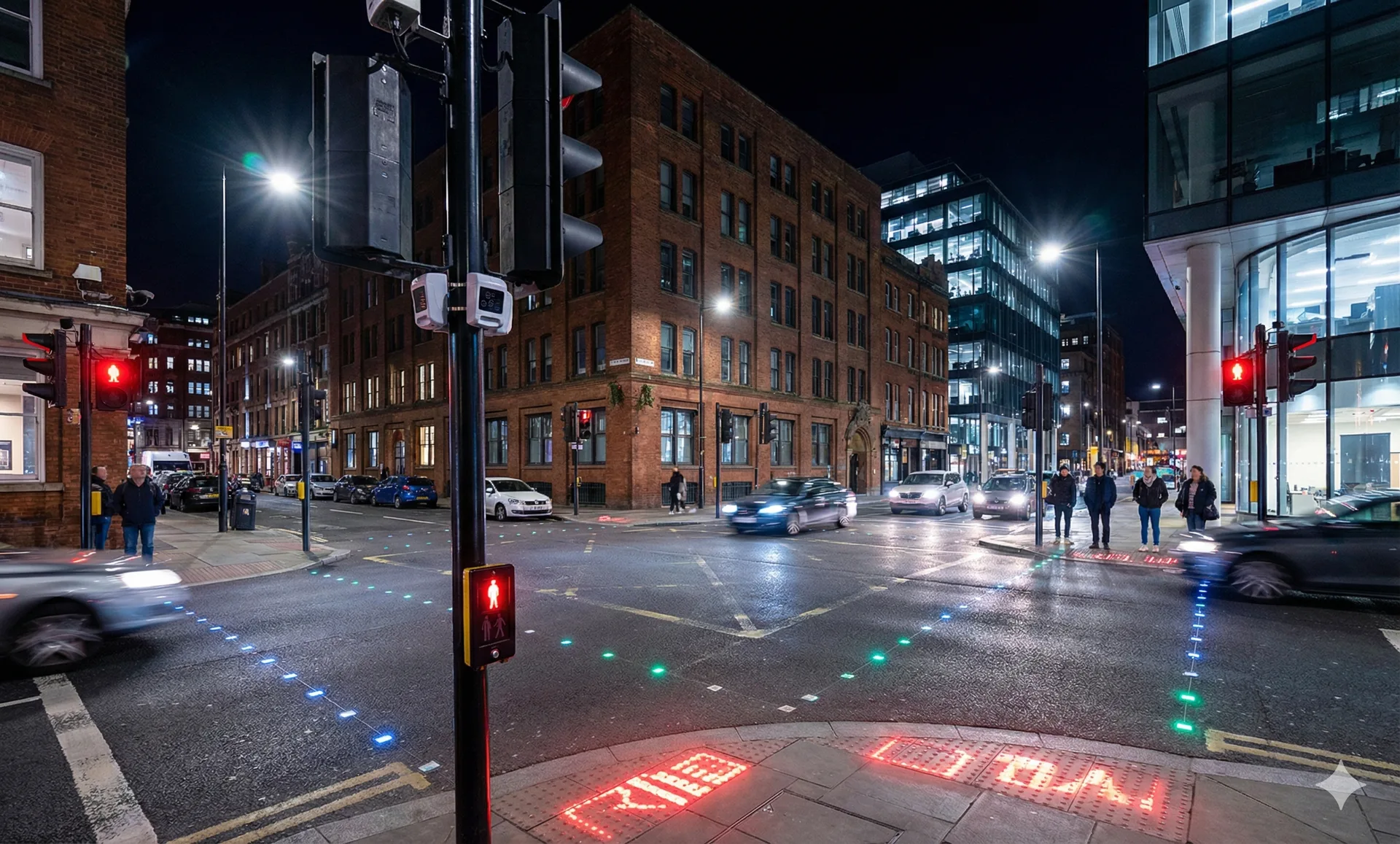
Cooperative Perception at Scale
A city deploys RevoFi devices at 500 high-risk intersections in partnership with local businesses. Edge AI processes signal phase and timing (SPaT) data, broadcasting to approaching vehicles. Cooperative perception aggregates data from multiple vehicles to detect pedestrians, cyclists, and cross-traffic beyond any single vehicle's sensor range. Collision warnings reach drivers 2-3 seconds earlier.
Truck Stop and Rest Area Partnerships
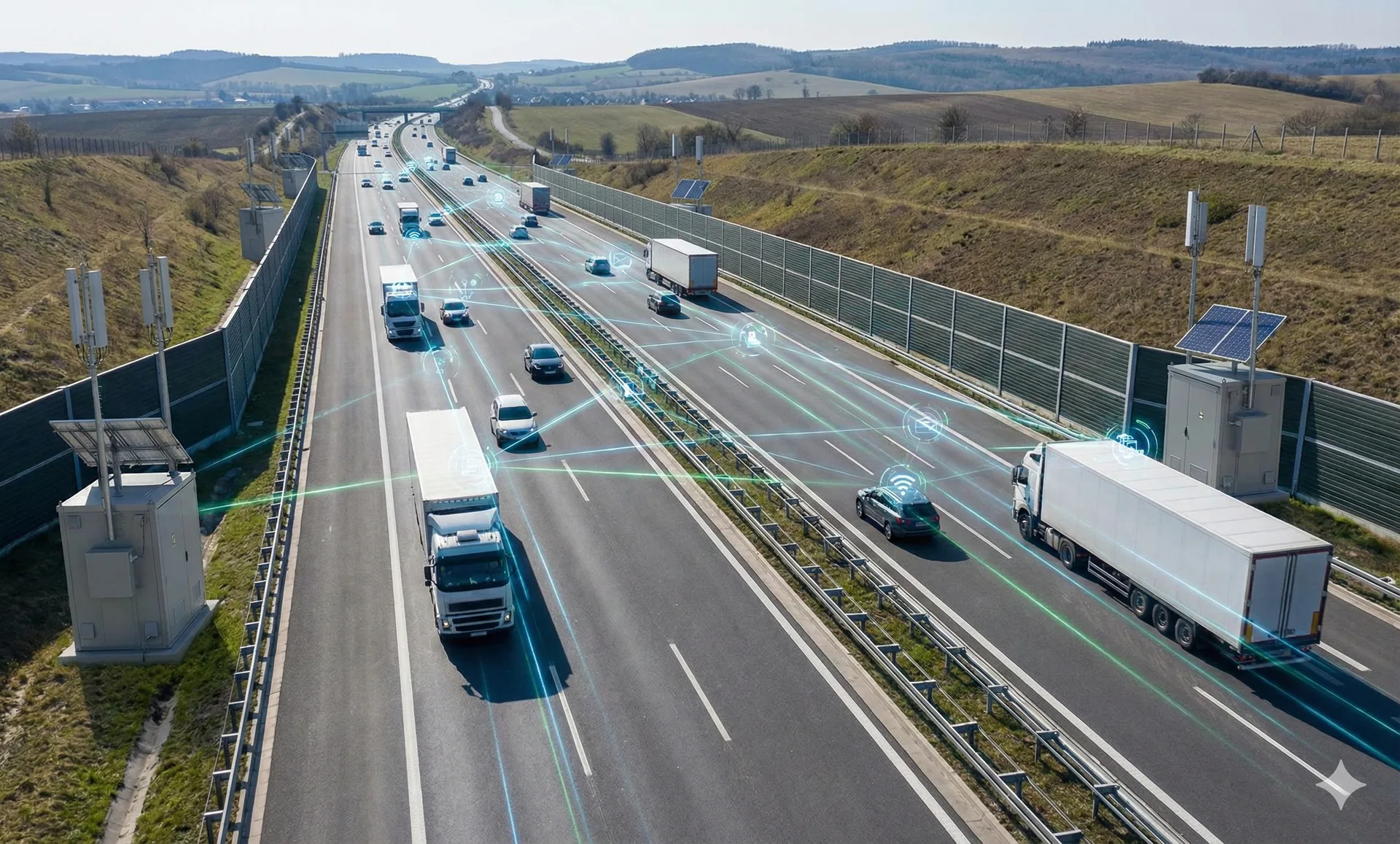
A state DOT partners with truck stops and rest areas along a 200-mile interstate corridor to deploy RevoFi infrastructure. Vehicles receive continuous V2I connectivity for cooperative awareness, real-time traffic updates, and HD map refreshes. Edge devices at each location provide compute for cooperative perception. Satellite backup ensures coverage between ground points.

GPS-Free Navigation
A parking operator deploys RevoFi mesh coverage throughout a multi-level parking structure. WiFi CSI positioning guides autonomous vehicles to available spaces with 47cm accuracy—no GPS, no beacons. Edge AI monitors occupancy in real-time, optimizing traffic flow and providing precise pickup/dropoff coordination for rideshare and delivery vehicles.

Depot-Based OTA Distribution
An autonomous vehicle fleet operator deploys RevoFi devices at charging depots. While vehicles charge, they connect to high-bandwidth WiFi for software updates, AI model improvements, and telemetry uploads—avoiding cellular bandwidth costs. Edge compute processes fleet analytics locally, identifying maintenance needs and optimizing charging schedules.

Low-Cost Wide-Area Coverage
A rural county deploys RevoFi Link Pro devices at key intersections and curves where accident rates are high. Satellite connectivity provides backhaul where cellular coverage is unavailable. Edge AI processes traffic patterns and broadcasts warnings about approaching vehicles to drivers at blind intersections. Total cost: under $175,000 for 100 locations.
Portable V2X Infrastructure
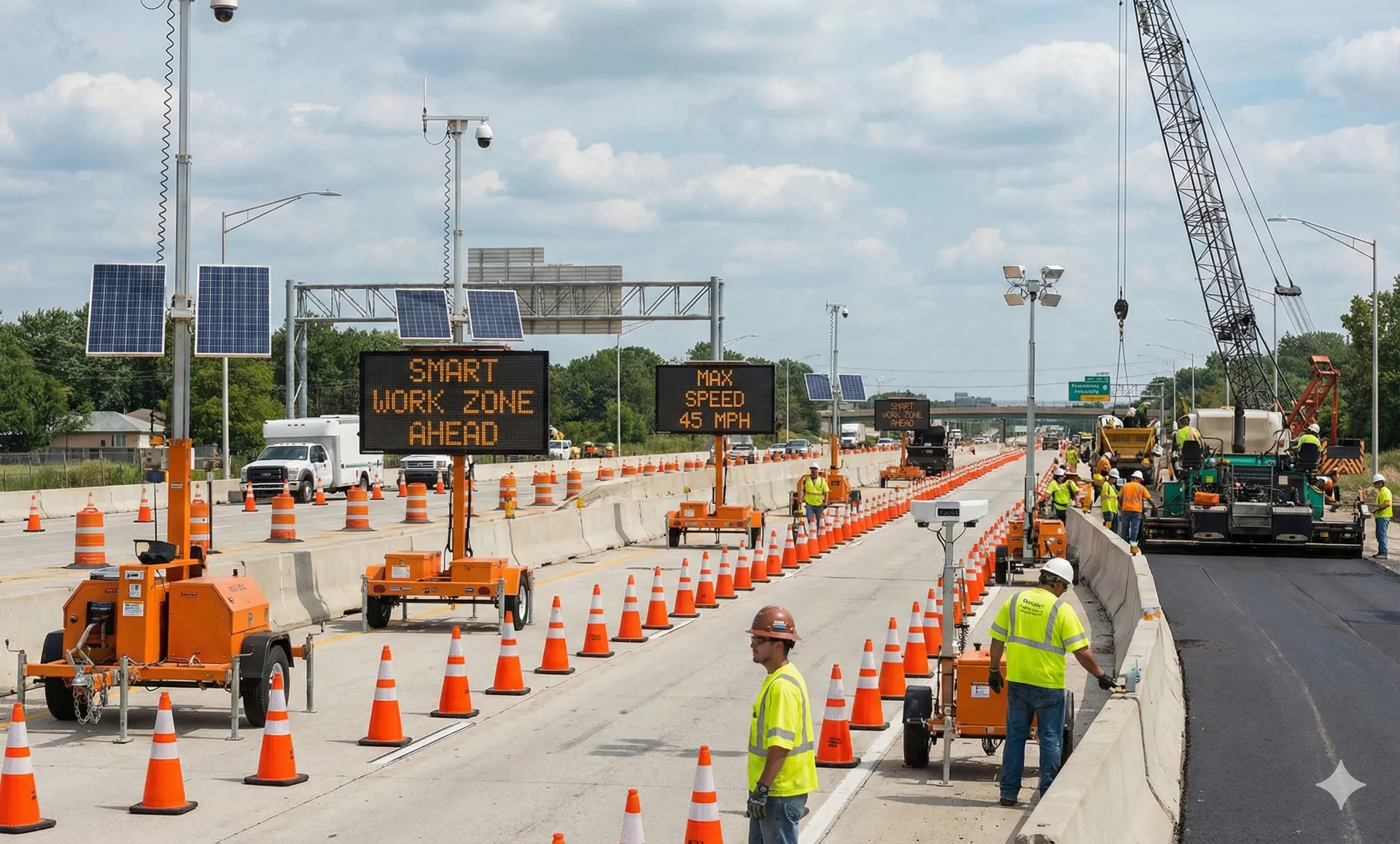
A highway construction contractor deploys portable RevoFi devices throughout a work zone. Approaching vehicles receive real-time alerts about lane closures, speed limits, and worker locations. Edge AI detects vehicles failing to slow down and triggers enhanced warnings. When construction moves, the infrastructure moves with it.
Deployment Model Comparison
| Aspect | Traditional RSU | RevoFi Approach |
|---|---|---|
| Unit Cost | $15,000–$30,000 | $1,000–$1,650 |
| Annual Maintenance | $2,000–$3,000/unit | Included in DePIN rewards |
| Deployment Timeline | 2–5 years (procurement) | 3–6 months (partnerships) |
| Funding Source | Municipal capital budgets | DePIN revenue sharing |
| Edge Compute | Optional / additional cost | Included (NVIDIA Jetson) |
| Standards Support | Typically single-mode | Dual-mode (C-V2X + DSRC) |
| Connectivity | Single path (cellular or DSRC) | Multi-path (WiFi + 5G + Satellite) |
| Coverage Gaps | Expensive to address | Satellite backup included |
| Software Updates | Manual / truck roll | OTA continuous |
Breaking the V2X Chicken-and-Egg Problem
The V2X ecosystem faces a fundamental challenge: vehicles need infrastructure to enable cooperative driving, but infrastructure investment is hard to justify without vehicles to use it. Traditional RSU deployments require massive municipal capital investments, multi-year procurement cycles, and ongoing maintenance budgets that most jurisdictions cannot support.
RevoFi breaks this cycle by deploying V2X infrastructure through decentralized networks that grow organically. Businesses earn rewards for hosting infrastructure, eliminating the need for government funding. Rapid deployment through partnerships means coverage expands alongside vehicle adoption rather than waiting years for procurement.
Connected vehicles need connected roads.
RevoFi builds them faster, cheaper, and smarter.
Ready to discuss V2X infrastructure for your region?
Contact UsRevoFi — The Intelligent Cloud
U.S. Patent No. 12,293,359